
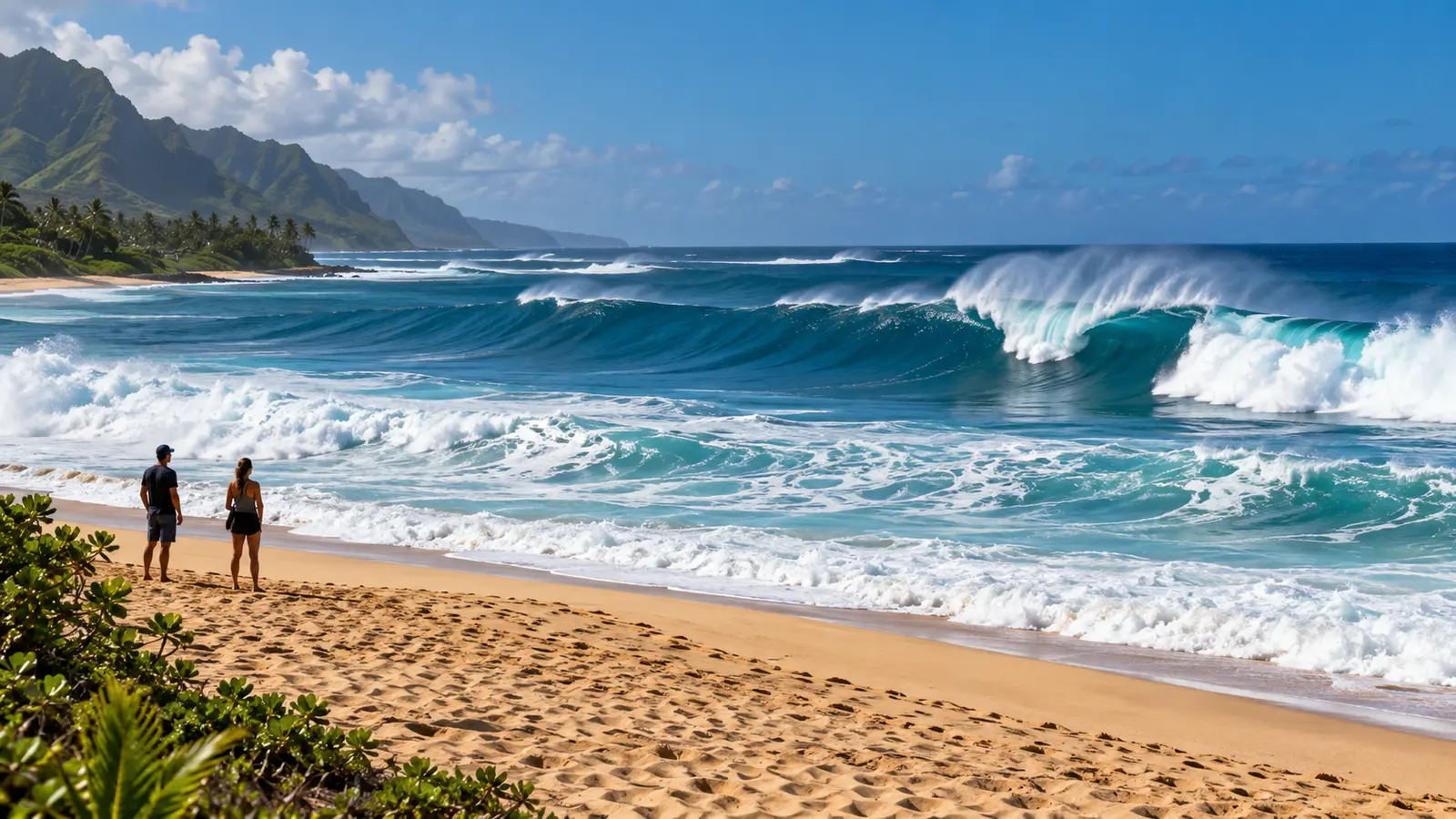
Seeing powerful waves in Hawaii can be exciting, especially when surfing is one of the main reasons for your trip. But if you are a beginner and the surf is too big, the smartest decision may be not to paddle out. That does not mean you have wasted the day. Oahu offers plenty of ways to learn about the ocean, explore the island, eat well, recover and enjoy surf culture without taking an unnecessary risk.
There is no single wave height that is safe for every beginner. Your swimming ability, ocean experience, board, fitness, entry point, currents, crowd and the shape of the beach all matter. A beach that was friendly yesterday can feel completely different today.
How do you know when the surf is too big?
For a first-time surfer, “too big” does not only describe the height of the wave. Small-looking surf can still create a strong rip current, difficult shorebreak or unsafe entry and exit. A crowded lineup can also make a session harder and more stressful.
Before deciding where to surf, check the National Weather Service Hawaii surf forecast and current warnings. Then look at local beach conditions, speak with a lifeguard and listen to an experienced instructor who knows that shoreline. Never rely only on a social-media video or a surf-app number.
- Look for posted warning signs and speak with the lifeguard.
- Watch the ocean for at least 15 minutes before entering.
- Identify your entry and exit points before you paddle out.
- Notice where currents, rocks, reefs and other surfers are moving.
- If you are unsure, stay out and choose another activity.
Our surf-safety guide explains more of the basics every visitor should understand before entering the water.
Do not assume another beach is automatically safe
Oahu has many coastlines, and conditions can be very different around the island. However, driving to another shore does not guarantee beginner-friendly waves. Wind, swell direction, tide, reef exposure and local conditions still need to be evaluated at the new beach.
This is one reason good surf coaching includes ocean navigation, not only standing up on the board. Learning when to surf, where to enter and when to change the plan is part of becoming a surfer.
1. Explore a botanical garden and waterfall
A garden or waterfall day gives you a chance to enjoy another side of Oahu while keeping the schedule relaxed. Waimea Valley on the North Shore combines a walk through botanical gardens with Hawaiian cultural sites and a waterfall area.
Swimming at Waimea Falls depends on the conditions and lifeguard operations that day. Life jackets are required when swimming is open. Check the official Waimea Falls swimming status before planning the swim, and remember that heavy rain or high water can change access.

2. Have a Haleiwa food day
When the ocean asks you to slow down, Haleiwa is an easy place to do it. You can try a fresh açaí bowl, poke, local coffee or one of the town’s casual food trucks. A relaxed lunch is also a good opportunity to talk about the waves you watched and what made the conditions difficult.
If you need ideas, start with our guides to Haleiwa food trucks and the North Shore açaí bowl scene. Businesses and hours can change, so check before driving.

3. Watch the waves from a safe place
You can learn a great deal by watching experienced surfers from a safe, designated viewing area. Notice where they paddle out, how long they wait, where the peak moves and how the current affects the lineup.
Stay well back from wet rocks, ledges and the waterline. Large sets can arrive after a quiet period and reach farther than expected. Never turn your back on the ocean for a photo.
4. Use the day for recovery and surf training
For adults learning in their 40s, 50s or 60s, recovery is not a lost day. It is part of making progress without overloading the shoulders, back, hips or knees. A lighter day can include walking, gentle mobility, breathing exercises and land-based pop-up practice.
If you filmed an earlier session, review the video. Look at board position, paddle timing, your hands during the pop-up and where your eyes were focused. One short video review can reveal more than repeating the same mistake for another hour.
5. Consider paddleboarding only when conditions are appropriate
Stand-up paddleboarding can be a calm-water alternative, but it is not automatically safe just because you are away from breaking waves. Wind, river flow, boat traffic and weather still matter. Go only where a qualified local operator confirms that the conditions match your experience, and wear the recommended safety equipment.
Our Oahu paddleboarding article offers more inspiration, but the decision should always be based on that day’s conditions.
Extra advice for solo travelers
Solo travel can be a great way to meet people and focus on learning, but avoid entering an unfamiliar surf break alone. Tell someone where you are going, keep your phone charged and choose lifeguarded beaches whenever possible. If the ocean does not feel right, trust that feeling.
A simple no-surf-day checklist
- Check the official surf forecast and active warnings.
- Ask a lifeguard or experienced local instructor.
- Do not choose a beach based only on wave height.
- Never enter the water to prove something.
- Pick one useful alternative: explore, eat, recover or study the ocean.
- Check conditions again the next morning.
Changing the plan is part of learning to surf
A responsible surf program does not force a session because surfing appeared on the itinerary. It evaluates the conditions, chooses an appropriate location and changes the plan when necessary. That judgment is one of the most valuable skills a beginner can develop.
If you want to prepare before your trip, the Surf Foundation guide covers technique, equipment, ocean safety and practical ground drills. For travelers who prefer several coached sessions plus Oahu experiences, you can also read about the five-day surf and adventure camp. The goal is not to surf at any cost. The goal is to understand the ocean and keep progressing safely.